Can Migraine Cause Hearing Loss, Ear Pressure, and Ringing?
This blog was medically reviewed by Dan Henry, M.D.
This content is for educational purposes only and is not medical advice. Always consult your healthcare provider before making changes to your treatment plan.
Migraine can cause ear symptoms like pressure, ringing (tinnitus), sound sensitivity, temporary hearing loss, dizziness, or vertigo. Because these symptoms can feel like an ear infection, sinus issue, or inner ear disorder like Ménière’s disease, they are often misunderstood or misdiagnosed.
Interestingly, types of migraine such as vestibular migraine and cochlear migraine can cause ear symptoms without significant head pain, which is one reason they are often overlooked.
This article is here to help you recognize symptoms and patterns that could be related to migraine. We won’t be covering treatment here. Instead, the focus is on helping you better understand your symptoms so you can seek the right evaluation and move closer to an accurate diagnosis.
MIGRAINE EAR SYMPTOMS (AND WHY THEY HAPPEN)
Migraine is a neurological disorder, not just a headache, which is why it can affect multiple systems in the body. It doesn’t just affect your head. It also affects how the brain communicates with nerve pathways connected to hearing and balance.
Migraine disrupts normal nerve signaling in the brain, including pathways connected to the inner ear (the part of the ear responsible for both hearing and balance). This is why people can experience ear symptoms even when ear exams and hearing tests come back normal.
Common migraine ear symptoms can happen before, during, or after a migraine attack and include:
Ear pressure or fullness - A feeling of fullness or pressure in the ear, similar to being on an airplane or having fluid in the ear, even when nothing is actually there.
Ringing in the ears (tinnitus) - Ringing, buzzing, or humming sounds that only you can hear.
Sound sensitivity (phonophobia) - Everyday sounds may feel too loud or overwhelming, even if they don’t bother others.
Ear pain - Discomfort or aching in or around the ear that isn’t caused by an infection.
Muffled hearing - Sounds may seem dull, distant, or harder to understand, especially in noisy environments.
Temporary hearing changes or migraine hearing loss - Hearing may fluctuate or suddenly feel reduced during a migraine episode, then improve afterward.
Because of how migraine affects these pathways, it’s often mistaken for an ear or sinus problem.
EAR PRESSURE AND MIGRAINE: WHY IT’S OFTEN MISTAKEN FOR SINUS ISSUES
Many people who believe they have sinus headaches are actually experiencing migraine attacks.
Migraine affects nerve pathways that connect the sinuses, ears, and brain. This is why symptoms like ear pressure, facial pressure, and congestion often show up together. Because of this overlap, these symptoms can feel very similar to a sinus infection or an ear issue.
Symptoms that are often mistaken for sinus issues include:
Ear pressure or fullness
Facial pressure
Stuffy or runny nose
Pain around the eyes
Research shows that 88% of self-diagnosed sinus headaches are actually migraine attacks. [1]
VESTIBULAR MIGRAINE: WHEN MIGRAINE AFFECTS BALANCE AND THE INNER EAR
Vestibular migraine (VM) is a type of migraine that affects the inner ear’s balance system.
Unlike typical migraine, VM may occur with little or no head pain. Instead, people experience symptoms related to balance and inner ear function. [2]
Vestibular migraine symptoms may include:
Ear fullness or ear pressure
Vertigo (spinning sensation) - A feeling that you or the room is spinning. Vertigo is a symptom, not a diagnosis, and is commonly seen in vestibular migraine.
Feeling off balance
Motion sensitivity
Nausea or dizziness
Head pressure
Tinnitus (ringing in the ears)
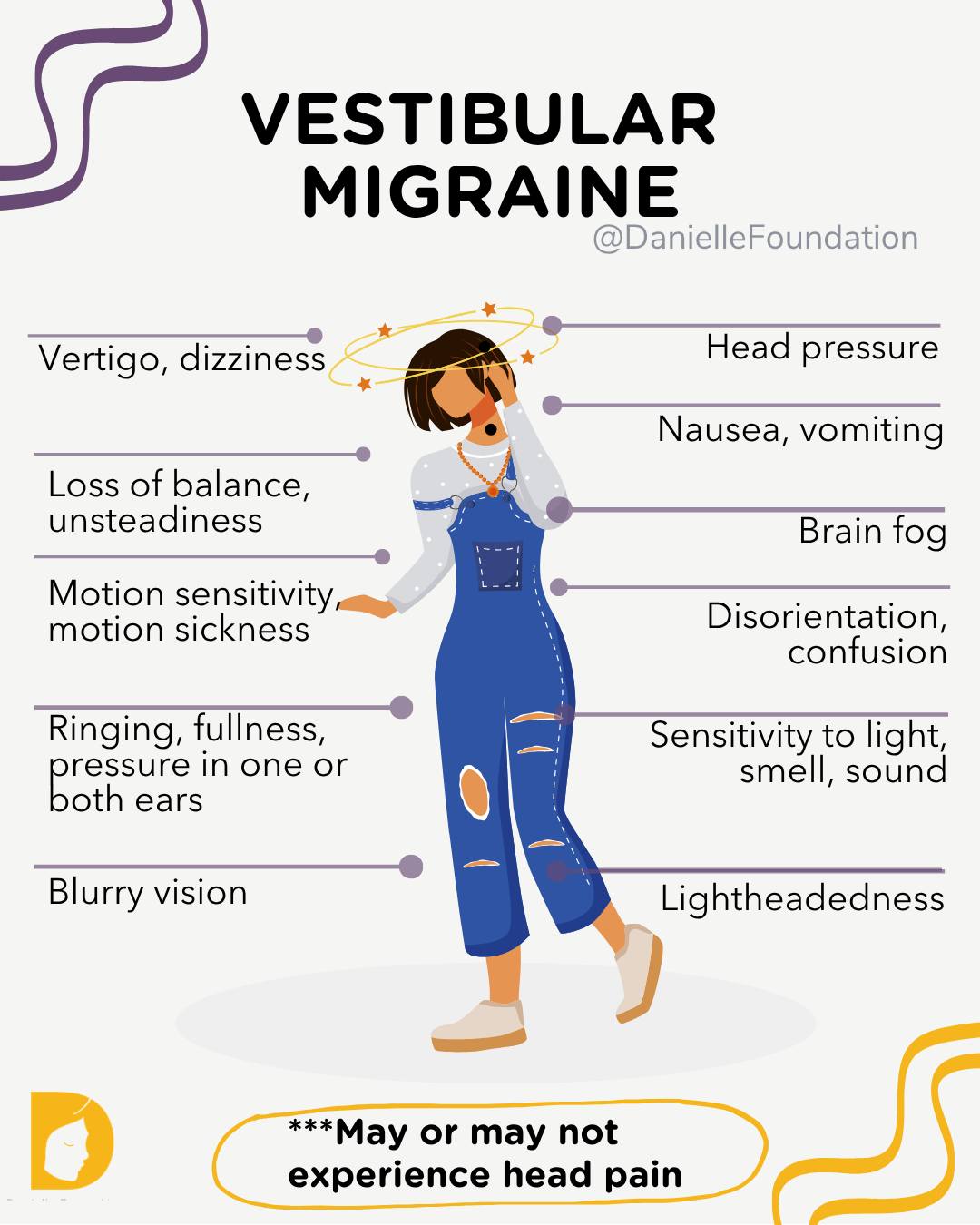
Because vestibular migraine symptoms overlap with inner ear disorders like Ménière’s disease, vestibular migraine is often misdiagnosed or overlooked. [3] Yet it is actually one of the most common causes of unexplained vertigo. In fact, about half of people with migraine experience vertigo or dizziness at some point. [4]
While some types of migraine mainly affect balance, others primarily affect hearing.
COCHLEAR MIGRAINE: WHEN MIGRAINE AFFECTS HEARING
Cochlear migraine is a lesser-known type of migraine that primarily affects hearing rather than balance. In cochlear migraine, the migraine process affects the cochlea, the part of the inner ear responsible for hearing. [5] This explains why some people with migraine experience hearing loss, tinnitus, or ear pressure without obvious ear disease. Cochlear migraine symptoms may include:
Sudden or temporary hearing loss
Ringing in the ears (tinnitus)
Aura before hearing changes
Neck stiffness (often one-sided)
Sensitivity to light or sound
Motion sickness
Visual motion sensitivity
Sensitivity to weather or pressure changes
Family history of migraine
Since cochlear migraine does not always include vertigo or head pain, it can be especially difficult to recognize. Many people undergo testing that comes back normal before migraine is considered. [5]
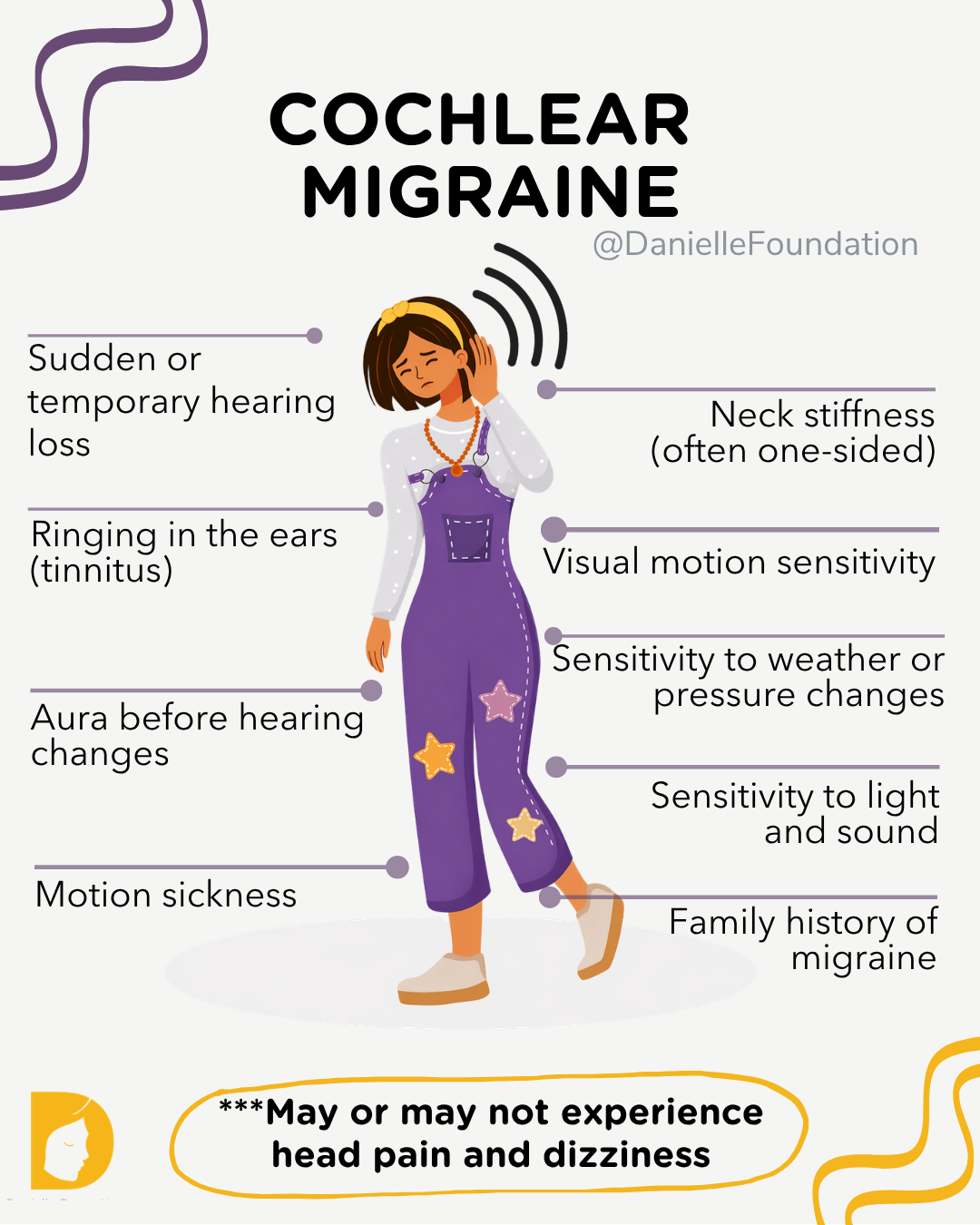
Cochlear migraine is still an emerging area of research, so many people are not familiar with it, including some healthcare providers. This can lead to delays in diagnosis or repeated testing that doesn't provide clear answers.
In many cases, people with cochlear migraine are told their hearing is “normal” despite ongoing symptoms. This does not mean the symptoms are not real. Instead, it reflects how migraine affects communication between the brain and inner ear in ways that aren’t always visible on standard tests.
CAN MIGRAINE CAUSE HEARING LOSS?
Many people ask, “Can migraine cause hearing loss?” Migraine doesn’t directly cause permanent hearing loss, but it can be associated with hearing-related symptoms. [6]
Certain types of migraine, including vestibular migraine and cochlear migraine, can affect the inner ear and hearing pathways. During an episode, this may lead to temporary hearing changes, such as:
Muffled hearing
Fluctuating hearing levels
Increased sensitivity to sound
Ringing in the ears (tinnitus)
Sudden or temporary hearing loss
Research suggests that people with migraine may have a higher risk of sudden hearing loss related to the inner ear. [6]
In many cases, migraine hearing loss is temporary and may improve as the episode resolves. Although temporary, it can still feel alarming, especially if it comes on suddenly.
Hearing loss can have other causes, so it’s important to seek medical evaluation.
Can Migraine Cause Ringing in the Ears (Tinnitus)?
Migraine can cause ringing in the ears, also known as tinnitus.
Tinnitus is often described as ringing, buzzing, or humming sounds that are not coming from an external source. For some people, it comes and goes with migraine attacks. For others, it may be more constant but change in intensity over time.
Migraine can affect nerve pathways in the brain and inner ear. This can change how sound is processed and lead to tinnitus, even when hearing tests come back normal.
Tinnitus is often seen in conditions like vestibular migraine and cochlear migraine, where the inner ear and hearing pathways are involved.
Because tinnitus can have many different causes, it’s important to look at the full pattern of symptoms. When it occurs alongside ear pressure, dizziness, or other migraine-related symptoms, it may be part of a broader migraine pattern.
At the same time, tinnitus can also occur on its own and may be unrelated to migraine. It can be caused by hearing loss, noise exposure, or other ear conditions.
One such condition is Ménière’s disease, which can present with very similar symptoms.
MÉNIÈRE’S DISEASE VS. MIGRAINE: WHAT’S THE DIFFERENCE?
Ménière’s disease is an inner ear disorder that can cause symptoms similar to migraine, including ear pressure, tinnitus, dizziness, hearing loss, and head pain. [8]
However, there are key differences:
Ménière’s disease:
Progressive hearing loss over time
Usually affects one ear
Recurrent episodes of true vertigo
Linked to inner ear fluid imbalance
Migraine (including vestibular or cochlear migraine):
Hearing symptoms are often temporary
Symptoms come and go with migraine attacks
Often includes other migraine features (light sensitivity, triggers, history of migraine)
Because symptoms overlap, misdiagnosis is common, and in some cases, both conditions may exist.
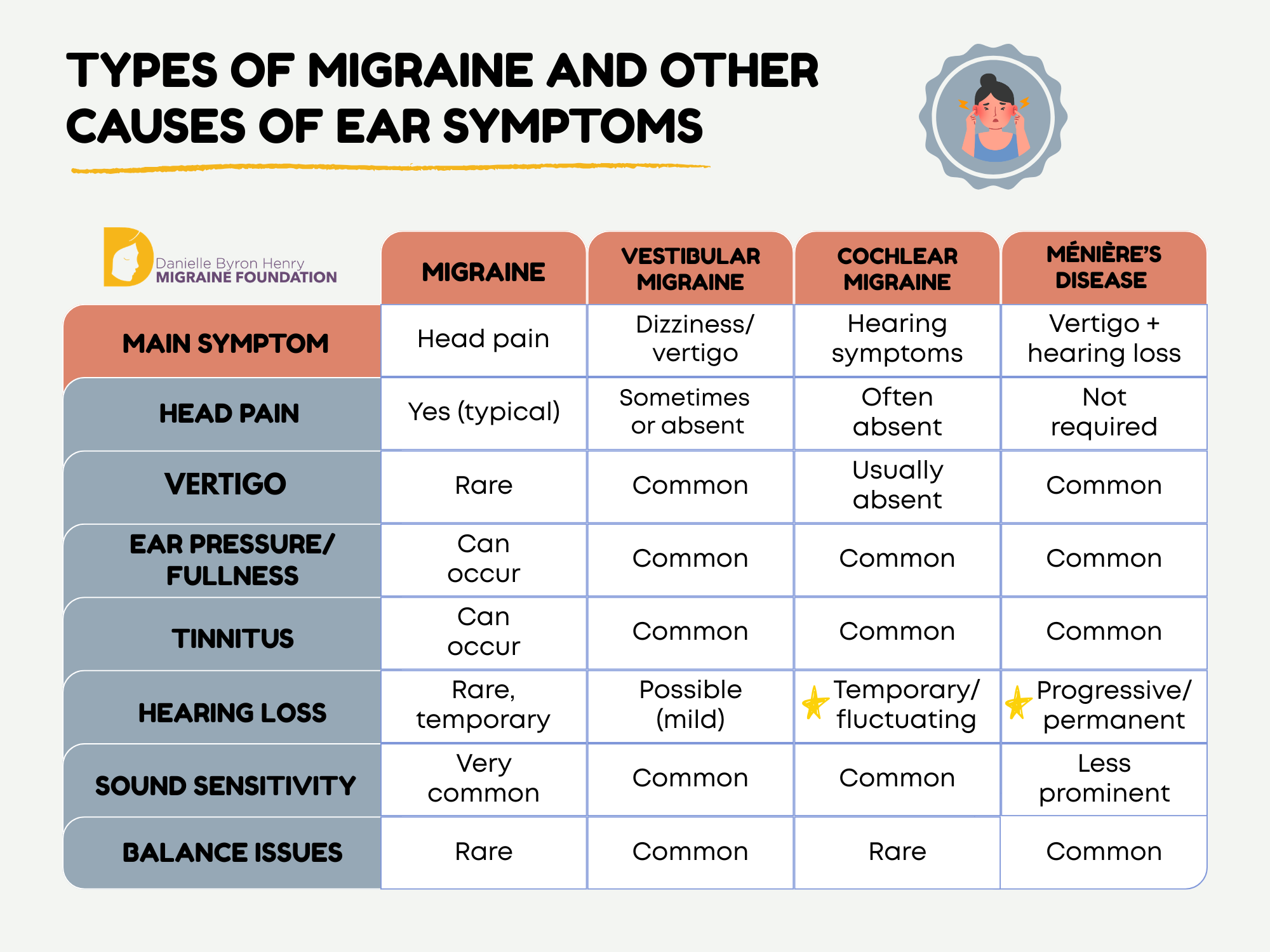
The chart below highlights key differences between types of migraine and other conditions that can cause similar ear symptoms.
SIGNS YOUR EAR SYMPTOMS MIGHT BE CAUSED BY MIGRAINE
It can be difficult to tell whether ear symptoms are related to migraine or another condition. Certain patterns may suggest migraine is the underlying cause:
Symptoms come and go
Ear exams and hearing tests are normal
Other migraine symptoms are present
Ear symptoms follow common triggers (stress, hormonal changes, or sleep changes)
Tracking symptoms over time can help identify patterns.
MIGRAINE AFFECTS MORE THAN JUST YOUR HEAD
Migraine is a complex neurological disorder that can affect many parts of the body, including the ears, balance system, and sinuses.
Many people live with ear symptoms for years without clear answers. If you experience recurring ear pressure, tinnitus, sound sensitivity, or hearing changes, migraine may be worth exploring with your healthcare provider.
Start by paying attention to patterns. Track your symptoms, notice potential triggers like sleep, stress, hormones, or food, and share that information with a healthcare provider who understands migraine. Recognizing this connection can help you get the right diagnosis and avoid unnecessary treatments.
WHEN TO SEE A HEALTHCARE PROVIDER
If you’re experiencing ear symptoms, it’s important to rule out other causes.
Seek medical care if you have:
Sudden hearing loss
Persistent or worsening symptoms
Severe dizziness or vertigo
New or unusual symptoms
Even when migraine is suspected, a proper evaluation is important to rule out other inner ear conditions.
If you think your ear symptoms are related to migraine:
Track your symptoms and triggers with a migraine diary or migraine tracker
Look for patterns (sleep, stress, hormones, food)
Talk to a neurologist, headache specialist, or a healthcare provider who understands migraine
Understanding these patterns can help you ask the right questions and move closer to an accurate diagnosis.
Pin it to your migraine board for later!
References:
[1] Schreiber CP et al. Prevalence of migraine in patients with a history of “sinus” headache. Archives of Internal Medicine. 2004. https://pubmed.ncbi.nlm.nih.gov/15364670/
[2] Johns Hopkins Medicine. Vestibular Migraine.
https://www.hopkinsmedicine.org/health/conditions-and-diseases/vestibular-migraine
[3] Liu, Y. F., & Xu, H. The Intimate Relationship between Vestibular Migraine and Meniere Disease: A Review of Pathogenesis and Presentation. Behavioural Neurology, 2016. https://doi.org/10.1155/2016/3182735
[4] Vuković, V., et al. Prevalence of vertigo, dizziness, and migrainous vertigo in patients with migraine. Headache, 2007. https://pubmed.ncbi.nlm.nih.gov/18052952/
[5] Djalilian, H. R., et al. “Cochlear Migraine: Exploring Migraine’s Impact on the Auditory System.” AAO-HNS Bulletin, May 15, 2025. https://bulletin.entnet.org/home/article/22940987/cochlear-migraine-exploring-migraines-impact-on-the-auditory-system
[6] Upham, B. What You Need to Know About Migraine and Hearing Problems. Everyday Health, March 16, 2021. https://www.everydayhealth.com/migraine/what-you-need-to-know-about-migraine-and-hearing-problems/
[7] Benjamin, T., et al. Vestibular and Auditory Manifestations of Migraine. Frontiers in Neurology, 2022. https://pubmed.ncbi.nlm.nih.gov/34864754/
[8] Johns Hopkins Medicine. Ménière’s Disease. https://www.hopkinsmedicine.org/health/conditions-and-diseases/menieres-disease

Dan Henry, M.D.
Dan Henry, M.D., earned his medical degree from the University of Washington and completed his residency at the University of Utah. A founding member of Foothill Family Clinic, he practiced there for over 40 years.
After losing his daughter Danielle to severe migraine disease at age 17, Dr. Henry dedicated his work to headache medicine, with a focus on children and young adults.
In 2016, he co-founded the Danielle Byron Henry Migraine Foundation with his family.